


Ford Mustang Mach-E: Real-World Range and Long-Term Maintenance
Buying an electric vehicle involves a lot of number-crunching, and the Ford Mustang Mach-E tends to generate plenty of questions before anyone signs on the dotted line. Range, heat performance, long-term cost compared to gas-powered alternatives, these come up constantly. At Stivers Ford South Fayetteville, the answers we give are a lot more specific than anything on a window sticker.
Ford Mustang Mach-E Range: Beyond the EPA Estimate
The EPA range figures for the Ford Mustang Mach-E are a useful starting point, but they come from controlled testing that doesn’t reflect the roads most drivers use daily. Depending on configuration, the 2026 Mach-E carries an EPA-estimated range of 240 to 320 miles, with the rear-wheel-drive extended-range model leading the lineup at 320 miles.
Real-world range is shaped by driving style, traffic conditions, and outside temperature, and most owners land somewhere between 80% and 90% of the EPA-rated figure in everyday driving. That’s consistent with how EVs generally perform outside a lab. Under sub-freezing highway conditions, third-party testing and owner reports show range can drop roughly 20–41%, so the cold snaps that reach Georgia’s northern counties are worth factoring into your planning.
The standard-range and extended-range battery configurations offer different efficiency profiles, and adding AWD shifts the equation again. Drivers who spend most of their time in stop-and-go traffic around Fayetteville and metro Atlanta often find real-world range compares favorably to highway-heavy commuters, since EVs recover energy more efficiently in urban conditions.
How Georgia’s Climate Affects Your Mach-E Range
Georgia’s climate adds complexity to Mach-E ownership that drivers in milder regions don’t always anticipate. Between intense summer heat, highway-heavy commutes, and the occasional cold snap, range shifts across seasons in ways worth understanding before you buy.
Heat and Battery Performance in Southern Summers
High temperatures take a measurable toll on EV battery efficiency. When the cabin needs aggressive cooling and the battery is managing elevated thermal loads, energy consumption rises and effective range drops. The Mach-E’s liquid-cooled battery pack handles heat better than air-cooled alternatives, but it still feels the pressure of a Georgia July.
Preconditioning is one of the most effective tools available. It cools the cabin and brings the battery to its ideal temperature while the car is still plugged in, so you’re drawing from the grid rather than the battery before you hit the road. Consistent preconditioning also reduces the heat stress that contributes to long-term battery degradation.
Highway Efficiency on Long Southern Drives
Long stretches of I-85 or I-285 aren’t where the Mach-E shines brightest. Highway driving above 70 mph reduces efficiency more noticeably than city driving because aerodynamic drag increases significantly at higher speeds. Add headwinds or a long uphill grade, and the range dip becomes more apparent.
Drivers planning longer trips through Georgia and beyond should plan around realistic highway mileage rather than city-based estimates. Using the vehicle’s navigation system to identify charging stops in advance removes the guesswork from longer routes.
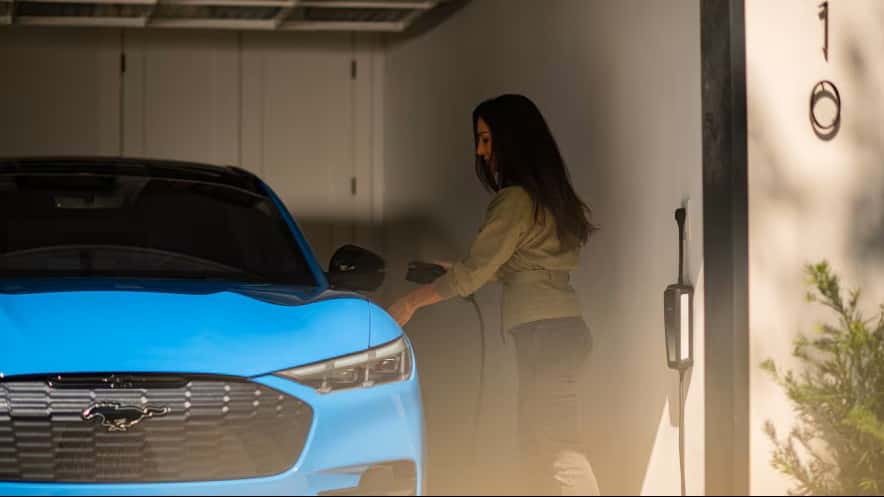
Charging Habits That Work for Everyday Mach-E Ownership
Most Mach-E owners charge at home the majority of the time, and that’s the most battery-friendly setup available. Here are the habits that make the biggest practical difference:
- Install a Level 2 home charger for overnight charging. It delivers a full charge without the elevated heat that DC fast charging produces, and you start each day with a full battery.
- Keep your daily state of charge between 20% and 80%. That range avoids stress from repeatedly charging to 100% or running close to empty.
- Reserve a full charge for days when you genuinely need maximum range, not as a daily routine.
- Use DCFC strategically on road trips rather than habitually. DC fast charging is built for those situations, but leaning on it daily accelerates battery wear more than Level 2 charging does.
- On Southern road trips, plan charging stops conservatively. Long interstate stretches in hot weather with A/C running will consume more range than your home-commute numbers suggest.
The Mach-E’s onboard charging management system helps protect against the worst outcomes, but smart driver habits make a real difference in preserving battery capacity over time.
Battery Care Tips for Long-Term Health in the Southeast
Georgia’s heat and humidity, combined with long driving seasons, make battery care more relevant here than in many other parts of the country. A few straightforward habits go a long way:
- Avoid deep discharges. Running the battery to near zero repeatedly stresses cells in ways that compound over hundreds of cycles.
- Park in the shade or in a garage during hot months to reduce passive thermal stress when the vehicle is sitting.
- Precondition before departure to manage both ends of the heat exposure problem.
- Precondition the battery before DC fast charging as well, not just for cabin comfort. A pre-warmed battery accepts a faster, more efficient charge.
- Monitor battery status and charging metrics regularly through the FordPass app. Catching changes early keeps minor issues from becoming bigger ones.
For drivers putting significant mileage on their Mach-E, periodic check-ins with a certified Ford technician provide a professional assessment that goes beyond what the app can show. Our service team in Fayetteville supports Mach-E owners with trained technicians and genuine Ford parts.
Long-Term Maintenance Costs Compared to a Gas Vehicle
What you don’t have to spend on a Mach-E is a big part of the ownership picture. Oil changes, spark plugs, and exhaust work simply aren’t part of an electric drivetrain’s service schedule. Fewer moving parts means fewer scheduled services, and that adds up meaningfully over time.
Tire wear is one area where EV owners sometimes find higher costs. The Mach-E’s instant torque and heavier weight can accelerate tire wear compared to a lighter gas vehicle. Brake wear, on the other hand, tends to be slower. Regenerative braking handles much of the deceleration, so the friction brakes get used less aggressively than they would in a conventional car. You’ll still budget for tires, cabin filter replacement, coolant system service, and 12V battery checks, along with charging system inspections.
Battery replacement is the big-ticket concern most buyers raise, and it’s a fair one. Battery technology and replacement costs have improved significantly, and Ford backs the Mach-E’s high-voltage battery with a warranty. For most drivers, lower routine maintenance costs, fuel savings, and a competitive warranty together make total Mach-E ownership cost look favorable against a comparable gas-powered SUV over a five-to-seven-year window. If you’re evaluating the full financial picture, we’re happy to walk you through financing options that make the move to EV ownership straightforward.
Make Your Move at Stivers Ford South Fayetteville
If you’re ready to move beyond the research phase and see how the Mach-E fits your actual driving life, the best next step is a test drive. We carry new and pre-owned Mach-E models, as well as Ford Certified Pre-Owned vehicles that include a 172-point inspection and a complimentary CARFAX Vehicle History report.
Whether you have questions about the Ford Mustang Mach-E, want to compare configurations, or need help thinking through total ownership costs, our team can work through it with you. Contact our team to schedule an EV consultation, or call us directly at 770-461-1151. We’re located at 275 Glynn St N in Fayetteville, GA, and we’ve been helping drivers in Union City, Fayetteville, and across the Georgia area find the right vehicle for nearly 50 years.
Images by OEM
0 comment(s) so far on Ford Mustang Mach-E: Real-World Range and Long-Term Maintenance